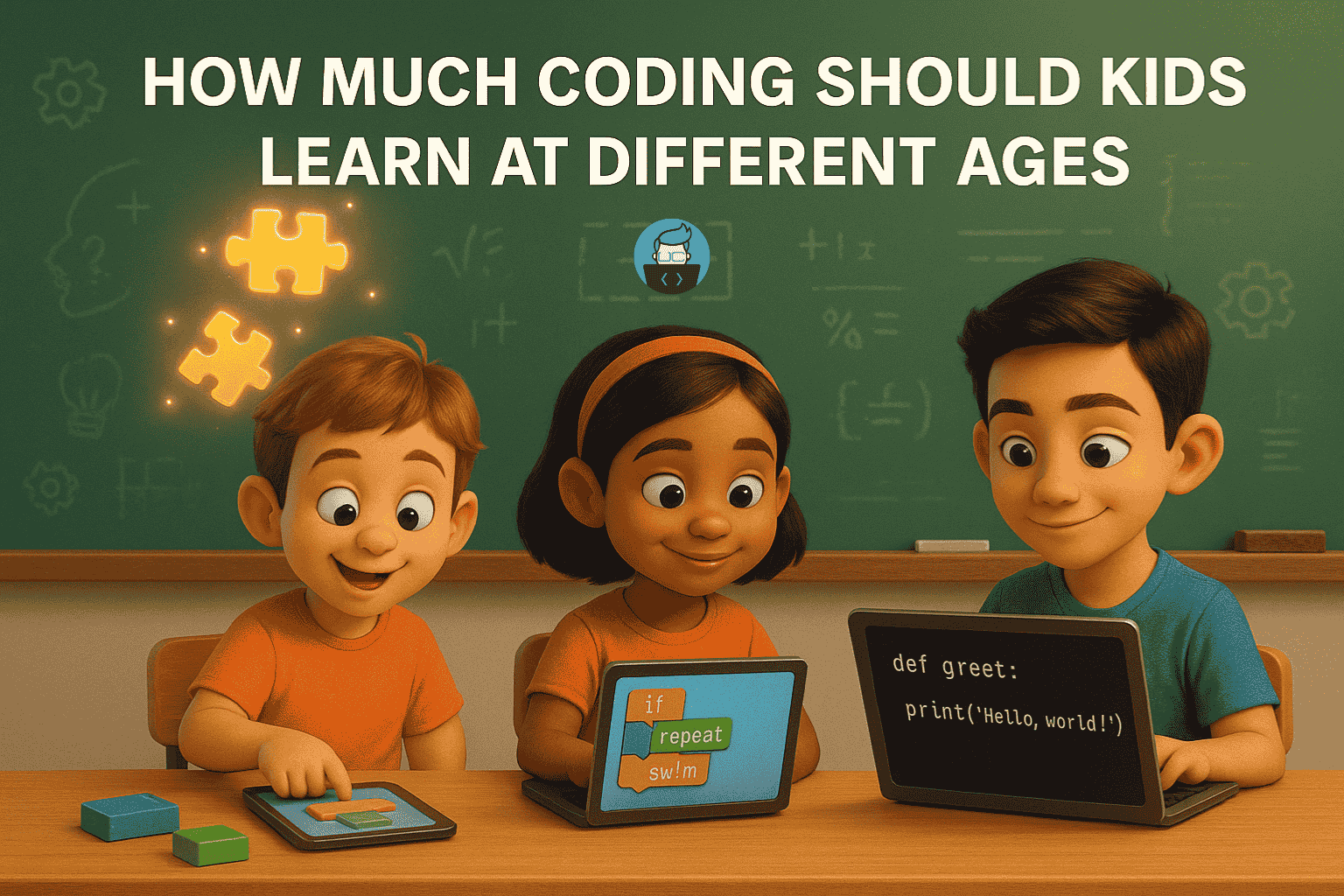
Parents often ask: “When should my child start coding—and how much is too much?”
The truth is, there’s no single answer. Coding isn’t about memorizing commands—it’s about developing problem-solving, creativity, and confidence. And just like reading or math, the approach changes as kids grow.
At Ultimate Coders, we’ve guided students as young as five and as old as seventeen. Over the years, we’ve learned that the key is meeting kids where they are developmentally—introducing the right concepts at the right time.
Here’s a breakdown parents can use to understand how coding fits into different ages and stages.
1. Ages 5–7: Playful Exploration
At this age, coding should feel like playtime.
Instead of typing code, kids use visual, drag-and-drop platforms like ScratchJr and Blockly. The goal isn’t mastery—it’s confidence.
What they do:
- Animate simple characters (a cat that dances, a rocket that launches)
- Snap colorful coding blocks together like digital LEGO
- Experiment freely without the fear of “getting it wrong”
What they learn:
- Patterns — recognizing sequences and repetition
- Cause and effect — “if I click this, my character moves”
- Creativity — expressing imagination in digital form
Think of it as laying the foundation: coding is presented as fun, approachable, and full of discovery.
2. Ages 8–10: Building with Intention
By now, kids want projects that feel more purposeful. They’re ready to go beyond “just making something move” to building actual games and interactive stories.
What they do:
- Create multi-step Scratch projects (a maze game, an animated comic, a digital birthday card)
- Explore loops, conditionals, and variables—without even realizing they’re learning programming logic
- Start programming robots like Dash, micro:bit, or LEGO® robotics
What they learn:
- Logic — connecting ideas into working systems
- Storytelling — designing experiences for others to enjoy
- Confidence — showing projects to friends, teachers, and family
This stage bridges fun with purpose. Kids realize that coding isn’t just a toy—it’s a tool.
3. Ages 11–13: From Play to Projects
Pre-teens are ready for real problem-solving. They want challenges that stretch their thinking and skills.
What they do:
- Transition from block-based coding to Python basics
- Design multi-level games with scoring systems and rules
- Collaborate with peers on shared projects (like coding a robot obstacle course)
- Debug projects—figuring out why something doesn’t work and fixing it
What they learn:
- Resilience — sticking with challenges instead of giving up
- Systems thinking — understanding how parts work together
- Collaboration — teamwork through coding projects
This stage is a turning point: kids move from “I can make something fun” to “I can solve a real problem.”
4. Ages 14+: Real-World Readiness
High school is where coding can transform from hobby to skillset. Teens at this age can apply coding to real-world passions.
What they do:
- Learn advanced coding languages like Python, JavaScript, or C++
- Build apps, websites, or even AI-powered projects
- Explore specialized fields: data science, cybersecurity, or game design
- Take on long-term projects (like building a portfolio website or programming a robot for competition)
What they learn:
- Practical application — using code to create tools they can actually use
- Critical thinking — solving open-ended problems without step-by-step guidance
- Independence — working on projects that could carry into college or career
By now, coding isn’t just a skill—it’s a pathway to future opportunities.
5. Why Age-Appropriate Progression Matters
Just like we don’t hand Shakespeare to a first grader, we shouldn’t hand Python to a six-year-old.
- Too much too soon can frustrate kids and make them lose interest.
- Too little too late can leave them unprepared for advanced problem-solving.
The sweet spot is introducing coding concepts in a way that matches their curiosity, developmental stage, and attention span—so every child feels challenged, but never overwhelmed.
Start at the Right Level
At Ultimate Coders, our programs grow with your child. Whether they’re five years old exploring colorful blocks or fifteen building their first app, we meet them where they are—and help them take the next step.
Book a free trial class today and discover the perfect entry point for your child’s coding journey. Explore Our Programs